IBM TechXchange
Client
IBM TechXchange
Year
2024
Infos
IBM TechXchange is IBM’s premier global technical conference and year-round community for developers, data scientists, IT architects, and operations professionals. Delivering deep technical training, hands-on labs, and professional certifications, the program connects participants directly with the engineers building IBM’s enterprise stack. This case study details the end-to-end design strategy across two major digital fronts for the 2025 conference in Orlando—bringing together over 10,000 global participants—supported by an ecosystem driving 500K monthly visitors and over 1 million annual blog views.

500K
in our webpages and TechXchange platforms
43%
Increase in learning hours
~ 1K
Badges earned from users coming from the app
Problem
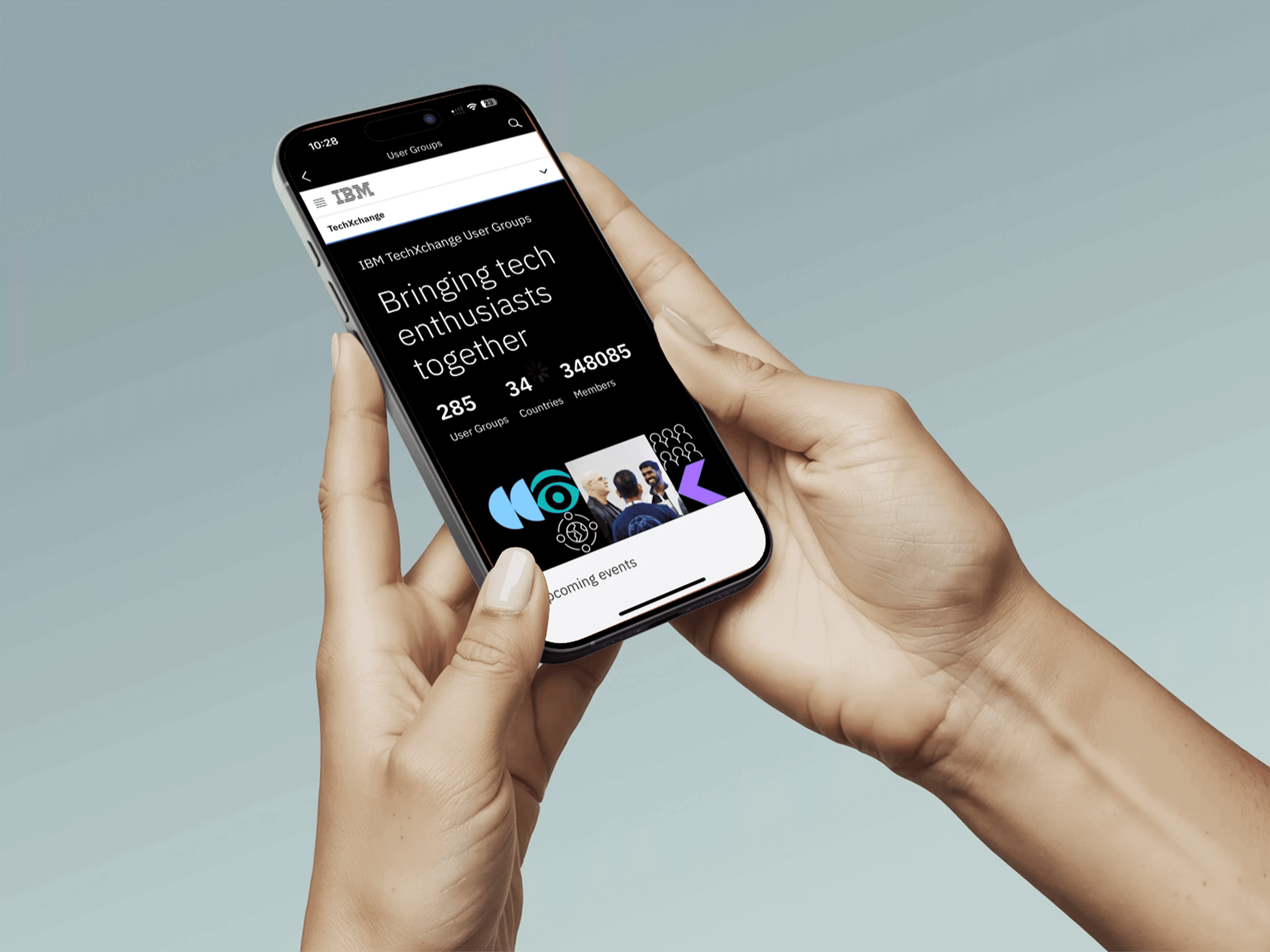
Working within a multidisciplinary team at IBM, the challenge spanned two distinct products: the Program & Conference Website and the Conference Mobile App. The primary friction points involved scaling a high-converting digital experience while remaining strictly bound to enterprise design constraints. Specifically, we faced: - Design System Constraints vs. Brand Uniqueness: Integrating unique, custom visual elements for TechXchange while strictly adhering to the rigorous components of IBM’s Carbon Design System and Carbon for IBM.com. - Complex Multi-Environment Delivery: Designing pages destined for radically different technological environments, including WordPress, React applications, and third-party mobile frameworks. - High-Stakes Usability: Optimizing the conference mobile app's navigation based on historical usage data to ensure seamless utility for thousands of attendees navigating physical event schedules in Orlando.


Time to Delivery
6 months
Squad Structure
3 Product Designers, 2 Developers
Process
Operating across the full product lifecycle, I led structural and visual initiatives to align user conversion goals with rigid enterprise standards. 1. Website & Theme Architecture (Carbon Design System) For the web surfaces, I balanced rapid iteration with strict design system governance. When leadership mandated that the entire conference landing page be built in dark mode to mirror live event branding, I leveraged the advanced variable functionalities within the Carbon Design System. By utilizing mode-switching logic and custom token mapping, we deployed an immersive dark theme (gray-100) while preserving underlying component constraints, accessibility standards, and responsive layouts across WordPress and React environments. 2. Mobile App Navigation & Strategy For the conference mobile app, the focus shifted entirely toward strategic information architecture and user flows. Collaborating closely with event stakeholders and analyzing previous usage data, I redesigned navigation pathways to minimize friction during live conference operations—ensuring attendees could instantly access schedules, maps, and session details under high-mobility conditions. 3. Cross-Functional Collaboration & Handoff Throughout the process, I maintained constant alignment between content creators, developers, and executive stakeholders. Handoffs were structured to accommodate the distinct technical parameters of React-based applications and WordPress web pages, ensuring flawless translation of visual assets, responsive behaviors, and state changes into production code.


Solution
The redesigned digital ecosystem for IBM TechXchange 2025 successfully bridged the gap between IBM’s corporate guidelines and a vibrant, engaging community conference brand. By leveraging advanced design system variables and targeted UX strategies, we delivered a polished, conversion-optimized web and mobile experience that supported massive scale: - Seamless Theming: Successfully executed a full dark-mode shift using system variables without breaking component integrity or accessibility. - Optimized Conversion & Engagement: Delivered high-impact web pages that drove strong user conversion for global programs and conference registration. - Streamlined Event Experience: Empowered over 10,000 attendees in Orlando with an intuitive, data-backed mobile application that eliminated navigation friction during the live event.


